
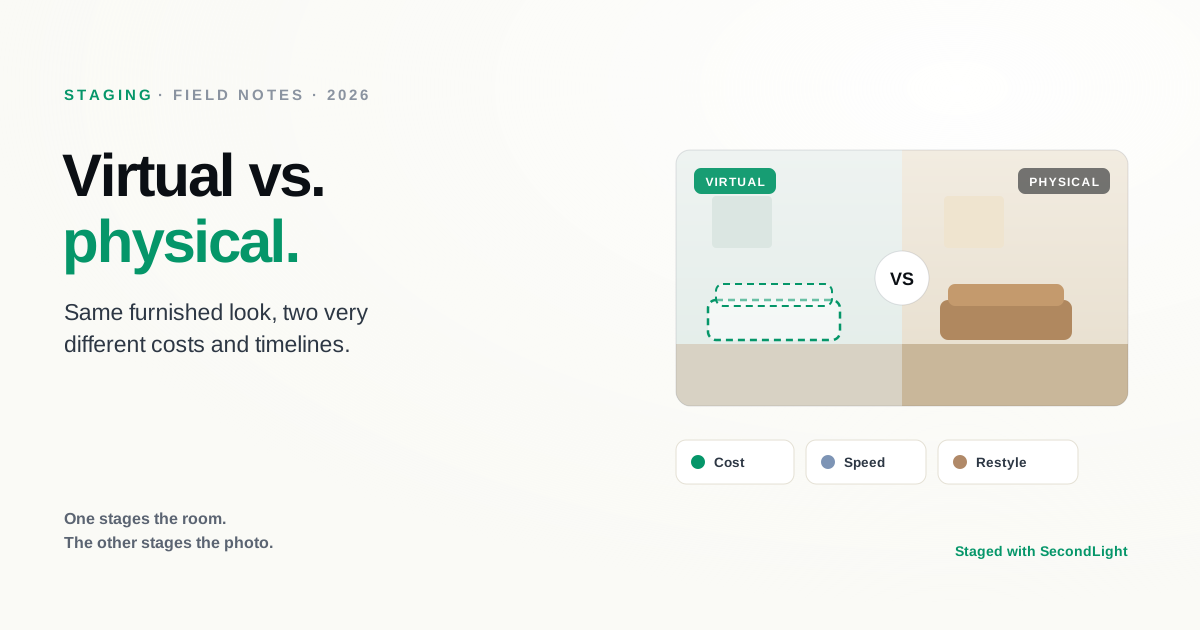
Physical staging and virtual staging are trying to do the same thing: put furniture in an empty room so a buyer can picture living there. They just go about it in completely different ways, with cost and time profiles that are worlds apart. This is a straight comparison of the two on the dimensions that actually decide a listing, along with an honest read on where each one still wins.
The core difference
Physical staging furnishes the real room. A stager brings in real sofas, beds, rugs, and art, arranges them, and the photographer shoots the furnished space. Buyers walk through that furniture at the showing.
Virtual staging furnishes the photo. You shoot the empty (or cleared) room, and furniture is added digitally to the image. The listing photos look furnished; the physical room stays empty. Modern AI virtual staging does this in minutes and, done well, is hard to distinguish from a real setup in the photo.
That single distinction (staging the room versus staging the image) is what drives every difference below.
Side by side
| Virtual staging | Physical staging | |
|---|---|---|
| Typical cost | ~$16-$75 per photo (pro services); far less with AI tools | $1,500-$4,000 first month whole-home; $3,000-$6,000+ for vacant homes |
| Time to go live | Minutes to hours | 7-14 days to schedule, furnish, and shoot |
| Restyling | Re-generate in a different style anytime | Re-book movers and re-shoot |
| Physical showings | Room stays empty | Buyers experience real furniture in person |
| Ongoing fees | None | +10-30% of the contract per extra month unsold |
| Disclosure | Must be labeled as virtually staged | No disclosure needed |
| Best for | Most listings, vacant homes, tight timelines, budgets | Luxury or high-touch listings where the in-person walkthrough is the sale |
Cost
This is the least close comparison. Professional physical staging runs roughly $1,500 to $4,000 for the first month on a whole home, and $3,000 to $6,000 or more for a vacant home that needs full furniture rental, per 2026 pricing data from HomeGuide and Angi. Per room, expect $300 to $700 a month. If the home does not sell inside 30 days, each extension adds another 10% to 30% of the original fee, so a slow listing quietly compounds the bill.
Virtual staging lands at roughly $16 to $75 per photo through professional services, and less again through AI tools, with no furniture to rent and nothing to haul back out. For the full breakdown, see what virtual staging actually costs. The short version: virtual staging captures the same visual payoff for a small fraction of the outlay. As with any pricing, these figures move over time, so treat them as of mid-2026.
Speed
Physical staging takes a week or two: schedule the stager, wait for furniture, set the room, then shoot. Virtual staging turns that into minutes, which means the listing can go live the day the empty-room photos come back instead of the following week. When a seller wants to hit the weekend or a client asks for a different look the night before an open house, that gap is the whole game.
Flexibility
A physically staged room is one look. Changing it means re-booking and re-shooting. A virtually staged photo can be re-generated in a different style, density, or room type on demand, so the same empty living room can be shown as mid-century modern for one audience and warm traditional for another. That makes it easy to match the staging to the buyer the listing is chasing.
Where physical staging still wins
Virtual staging is the right default for most listings, but it is not a clean sweep, and pretending otherwise costs credibility.
- The in-person walkthrough. Physically staged furniture is there at the showing. Buyers sit on the sofa, feel the scale of the room, and form the emotional attachment that a photo cannot fully manufacture. Virtual staging sells the click; physical staging can help close the visit.
- Luxury and high-touch listings. At the top of the market, buyers expect a fully dressed home in person, and the staging budget is a rounding error against the sale price.
- Occupied homes that photograph poorly. Sometimes the fix is real: declutter, remove, and rearrange actual furniture. Though for occupied rooms, AI decluttering often gets you most of the way for far less.
The honest framing: virtual staging wins the online first impression, which is where most buyers now decide whether to visit at all. Physical staging can add something at the showing itself. On the majority of listings, the online first impression is the higher-leverage place to spend.
Believability and disclosure
Good virtual staging is photorealistic. Bad virtual staging has tells (furniture that floats, wrong scale, warped architecture) and buyers notice them, so quality matters more than the label. Our guide to the signs of bad AI staging covers what to watch for.
One rule that does not apply to physical staging: virtually staged photos must be disclosed. You never alter the actual structure of the property, and you label the images as virtually staged where your MLS requires it. Our disclosure rules guide covers exactly where that line sits.
How to decide
- Vacant home, normal budget, needs to list fast? Virtual staging, almost every time.
- Occupied home that just needs tidying? Declutter the photos rather than stage from scratch.
- Luxury listing where the in-person experience is the sale? Consider physical staging, or pair a physically staged hero space with virtual staging for the rest.
- Not sure the empty rooms are landing online? Virtual staging is the cheapest way to fix the thing buyers actually see first.
The bottom line
Physical staging captures the upside at four figures and a week of lead time. Virtual staging captures most of the same upside for the price of a few coffees and a few minutes, with the flexibility to restyle whenever the listing needs it. For the online first impression that now decides most showings, virtual is the higher-return choice on the majority of listings.
SecondLight is built for that path: instant turnaround, every room type and style included, and revisions that do not cost extra. See current pricing whenever you are ready, or read the ROI data if you want the numbers behind the case.
About
Written by SecondLight Team. Issue Nº 013 of Field Notes.
Read next
Back to archive
All Field Notes