
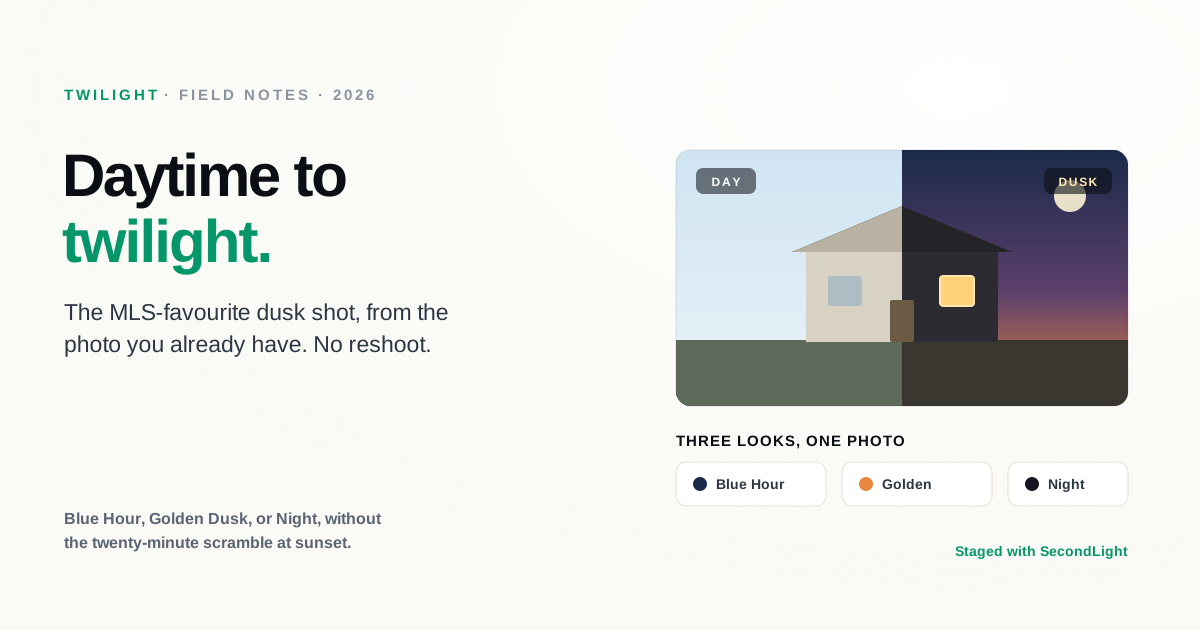
Scroll any set of top-performing listings and you will keep seeing the same shot: the exterior at dusk, windows glowing warm against a deep blue sky. The twilight photo is one of the most reliably attention-grabbing images in real estate, and agents fight to get it. The problem is that a real twilight shot is a logistical headache. There is one usable window of about twenty minutes after sunset, the light changes by the second, weather can wipe it out, and catching it usually means a second trip to the property. Day-to-dusk conversion solves that by turning a photo you already have into the twilight version, no reshoot required.
What day-to-twilight conversion does
The idea is simple: take a daytime exterior (or an interior with windows) and recompose it as if it were shot at dusk. The flat blue afternoon sky becomes a graded twilight sky, the interior lights read as warm and on, and the whole image shifts to the mood buyers respond to. Good tools give you a few looks to choose from rather than one preset:
- Blue Hour, the cool, calm deep-blue sky just after sunset.
- Golden Dusk, warmer and more dramatic, with color still in the sky.
- Night, darker and moodier, leaning entirely on the glow from the windows.
You pick the one that suits the property and the market instead of hoping the weather hands it to you.
Why the twilight shot works
Part of it is contrast. In a feed of flat midday exteriors, a warm dusk image stops the scroll. Part of it is psychology: a lit home at the end of the day reads as arrival, as the place you come back to, which is exactly the feeling that moves a buyer from browsing to booking a showing. And because the first photo carries most of the click-through weight, a strong twilight hero shot does real work at the top of the funnel where it matters most.
Keeping it believable
Twilight conversion earns its reputation when it is subtle and loses it when it is not. A few things separate a convincing dusk shot from an obvious edit:
- Match the interior glow to the windows. Lights should read as warm and on in the rooms that actually have windows facing you, not as a uniform yellow wash across the whole facade.
- Pick a sky that fits. A screaming purple-and-orange sky over a modest suburban home reads as fake. The sky should suit the property and the region, and the ambient light on the building should agree with it.
- Don't overcook it. The same instinct that ruins staged interiors, pushing an effect past what looks real, ruins twilight shots. If it looks like a poster, dial it back.
These are the same quality lines we cover in the signs of bad AI editing. A twilight image that warps the building or invents a sky that could not exist is a quality problem and, if it changes how the property reads, a disclosure one too.
A quick note on disclosure
Twilight conversion is an edit, and the same principle applies as with virtual staging: if the change materially affects how a buyer perceives the property, disclose it. Turning a captured afternoon into a believable dusk is generally treated as a lighting and mood edit rather than a misrepresentation, but rules vary, so label it if your MLS expects altered exterior photos to be marked and check your local policy. Our disclosure rules guide covers where the line sits.
When to use it
Reach for twilight on the hero shot of a listing where curb appeal is the story: a home with good architecture, nice landscaping, or lots of glass that lights up well. It is especially valuable when you simply cannot get back to the property at golden hour, or when the day you shot was flat and grey. One strong dusk exterior at the top of the set often does more than three more midday angles.
The bottom line
The twilight shot sells because it makes a home feel lived-in and inviting at exactly the moment a buyer decides whether to keep scrolling. Day-to-dusk conversion gives you that shot without the second trip and the twenty-minute scramble, as long as you keep it believable. SecondLight can convert a daytime exterior or interior into a Blue Hour, Golden Dusk, or Night look from the photo you already have. See which plan includes it whenever you're ready.
About
Written by SecondLight Team. Issue Nº 014 of Field Notes.
Read next
Back to archive
All Field Notes